Explore China's most renowned historic teahouses to uncover the unique world of tea culture.
Wherever people gather, from the north to the south, there is a cup of clear tea. An old teahouse is never just a place to rest and sip tea; it is a microcosm of local life, a vessel for everyday human stories, and a living fossil of regional tea culture forged over centuries. Traveling across China, visiting these renowned historic teahouses, you taste the tea in your cup but read the vibrant tea world hidden within the smoke and bustle of daily life.
Wherever people gather, from the north to the south, there is a cup of clear tea. An old teahouse is never just a place to rest and sip tea; it is a microcosm of local life, a vessel for everyday human stories, and a living fossil of regional tea culture forged over centuries. Traveling across China, visiting these renowned historic teahouses, you taste the tea in your cup but read the vibrant tea world hidden within the smoke and bustle of daily life.
In Sichuan and Chongqing, teahouses embody the very essence of everyday life. Here, they are neither refined nor vulgar, open to all regardless of status. With a single bowl of tea, one can effortlessly spend half a day.
Pengzhen Guanyin Ge Old Tea House is a time capsule of Western Sichuan left for the world. Centuries-old Western Sichuan residences stand quietly, with tiger stoves burning charcoal day and night. The yellow clay floor bears deep, uneven footprints worn down by generations of tea drinkers, while mottled earthen walls carry the marks of time. Just as dawn breaks, regulars arrive in waves; boiling water from copper kettles fills lidded bowls, sending clouds of fragrant steam into the air. More than just a place to drink tea, this is a pilgrimage site for humanistic photography across China. Amidst the rising steam and bustling atmosphere, the vibrant scene of Chengdu's morning tea culture unfolds before your eyes—every room, every table offers an authentic glimpse into Western Sichuan life.
Heming Teahouse, located within People's Park, is synonymous with Chengdu's open-air "baba" tea culture. Beneath the shade of trees by the lake, rows of bamboo chairs stretch endlessly, each accompanied by a gaiwan tea set. Here, locals and visitors alike bask in the sun, chat leisurely, enjoy ear cleaning, and are served by skilled tea masters weaving through the crowd with long-spouted copper kettles. There are no formalities or social barriers; simply sharing a cup of tea captures the laid-back, unhurried lifestyle that defines Chengdu people to their core.
Chongqing Jiaotong Tea House in Huangjueping is steeped in the city's unique, rugged charm. Housed in a repurposed old factory, it embraces raw authenticity with concrete floors and vintage ceiling fans. Students from the Sichuan Fine Arts Institute and longtime neighborhood residents gather here, where lively chatter and the clinking of teacups create an unpolished, vibrant atmosphere that reflects Chongqing's straightforward, spirited street culture.
Beyond the mountains and rivers, Beijing Lao She Teahouse embodies the unique folk tea culture of northern China. Starting from affordable large-bowl teas, it has transformed into a prestigious cultural landmark in the capital. Within its ornate halls, the aroma of large-bowl tea fills the air as Peking Opera, traditional drum storytelling, and various art forms take turns on stage. Here, tea drinking blends seamlessly with theatrical performances, offering insight beyond the cup into the daily life, customs, and etiquette of old Beijing. More than just a teahouse, it serves as a window showcasing authentic Jing-style traditions, preserving the vibrant yet refined spirit of old Beijing for all to experience.
Step into Jiangnan's water towns, where the Yiyuan Teahouse in Digang Village offers a uniquely gentle and tranquil experience. Sit by the riverside in this ancient town on rustic tables and chairs made from reclaimed boat wood, worn smooth by time yet simple and serene. For just a few yuan, you can settle in for tea while local elders chat away, watching the river flow slowly and the town bustle with passersby. No noise or crowds here—just a cup of clear tea to witness life in the freshwater region. One cup, one seat: this is the most authentic warmth and peace of Jiangnan's rural society.
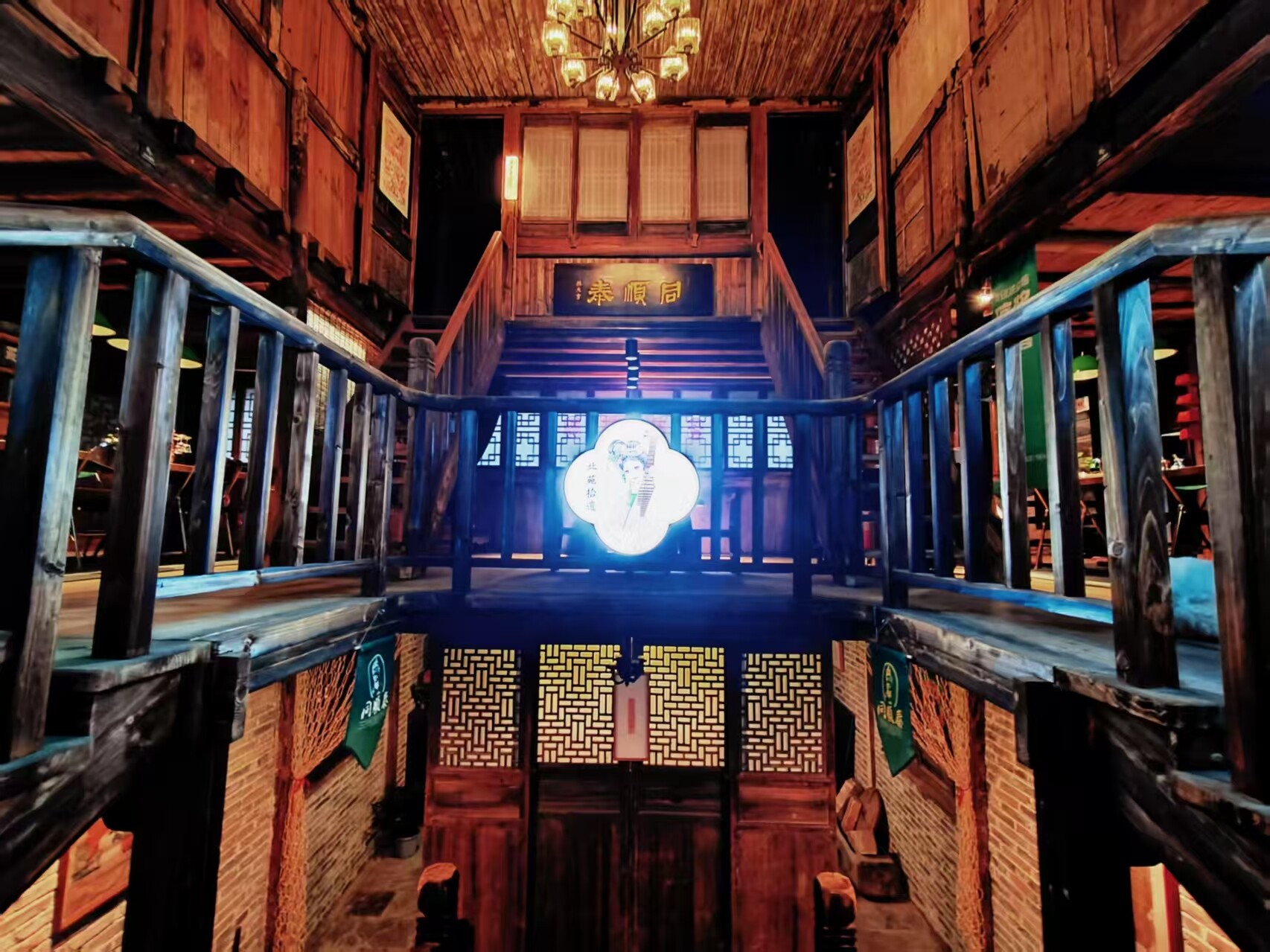
If Sichuan-Chongqing tea houses capture the vibrant street life, northern ones showcase folk arts and opera, and Jiangnan tea houses reflect the serene charm of water towns, then stepping into Tongshuntai Old Tea House on Bailin Old Street in Fuding, Fujian, you're sipping a century-long story of white tea's rise and fall in commerce.
Unlike most teahouses that focus on leisure and socializing, Tongshuntai originated from an export tea merchant established in the late Qing Dynasty. During its peak, Bailin Old Street was a bustling hub of tea merchants and served as a key distribution center for Fujian's eastern region. Countless boxes of white tea were loaded here to set sail overseas. As a major player in foreign trade for white tea at the time, Tongshuntai witnessed the rise and fall of prosperity along the Maritime Tea Road.
Today, ancient dwellings are restored following the principle of "repairing old as old," preserving their original wooden structures. Vintage tea ledgers and traditional tea-making tools are displayed quietly, recounting the storied history of tea trade. Far from being sealed off as a cold museum, this space operates as a living, breathing heritage tea house. Seated in the tea hall, slowly brew a pot of authentic aged white tea. Its delicate downy aroma is fresh and clear, while its mellow notes unfold layer by layer, fully releasing the pure essence of high-mountain white tea.
The Old Tea House honors tradition while embracing the times. Seniors can savor aged white tea and reflect on a century of tea history, while younger visitors enjoy cold-brewed white tea or a signature white tea ice cream. Ancient brewing methods coexist with modern tea creations—this historic house is no longer confined to the past but truly alive today.
At other tea houses, tea is a pastime, a gathering, part of daily life. But at Tong Shun Tai, sipping this cup of white tea does more than quench thirst—it connects you to the century-old trade and cultural heritage of Min Dong white tea that has spanned mountains and seas.
From north to south, countless old teahouses stand with their own character. Each region's land nurtures its unique tea culture. The blend of daily life, folk arts, water towns, and merchant houses—each with its distinct flavor—forms the grand tea world uniquely Chinese.
Come to Bailin, Fujian. Keep the promise with Tongshuntai. For a century, Tongshuntai has served a cup of Fujian White Tea. In this historic house filled with tea aroma, discover the century-long story behind white tea.