
Light Determines the Phenol-to-Amino Acid Ratio: Understanding the Flavor Roots of Fuding and Yunnan White Tea
Mist-diffused light in Fuding creates a low phenol-to-amino acid ratio, delivering fresh and mellow white tea. Intense high-altitude sunlight in Yunnan yields a high phenol-to-amino acid ratio, building a full-bodied and robust structure for its white tea.
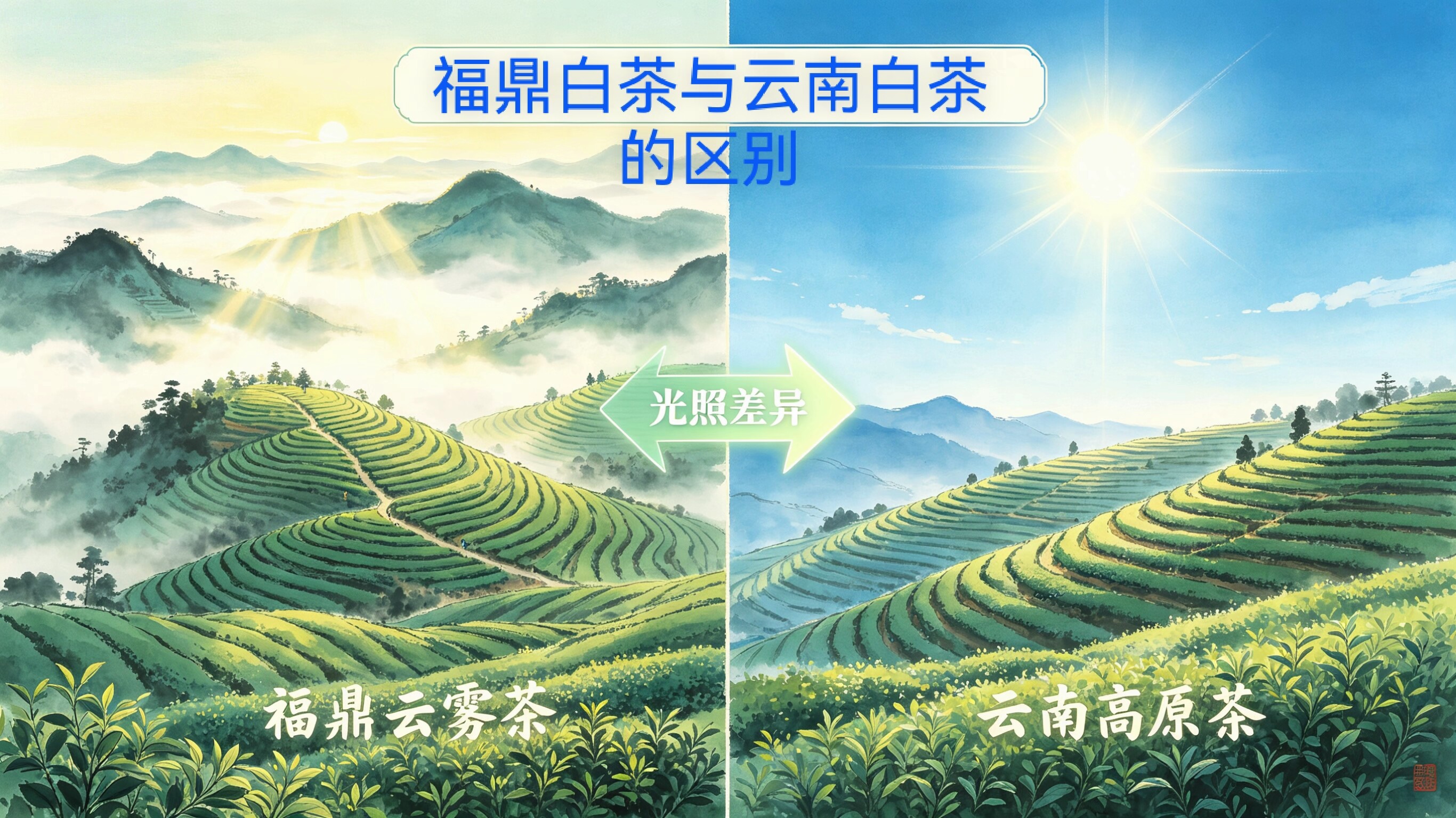
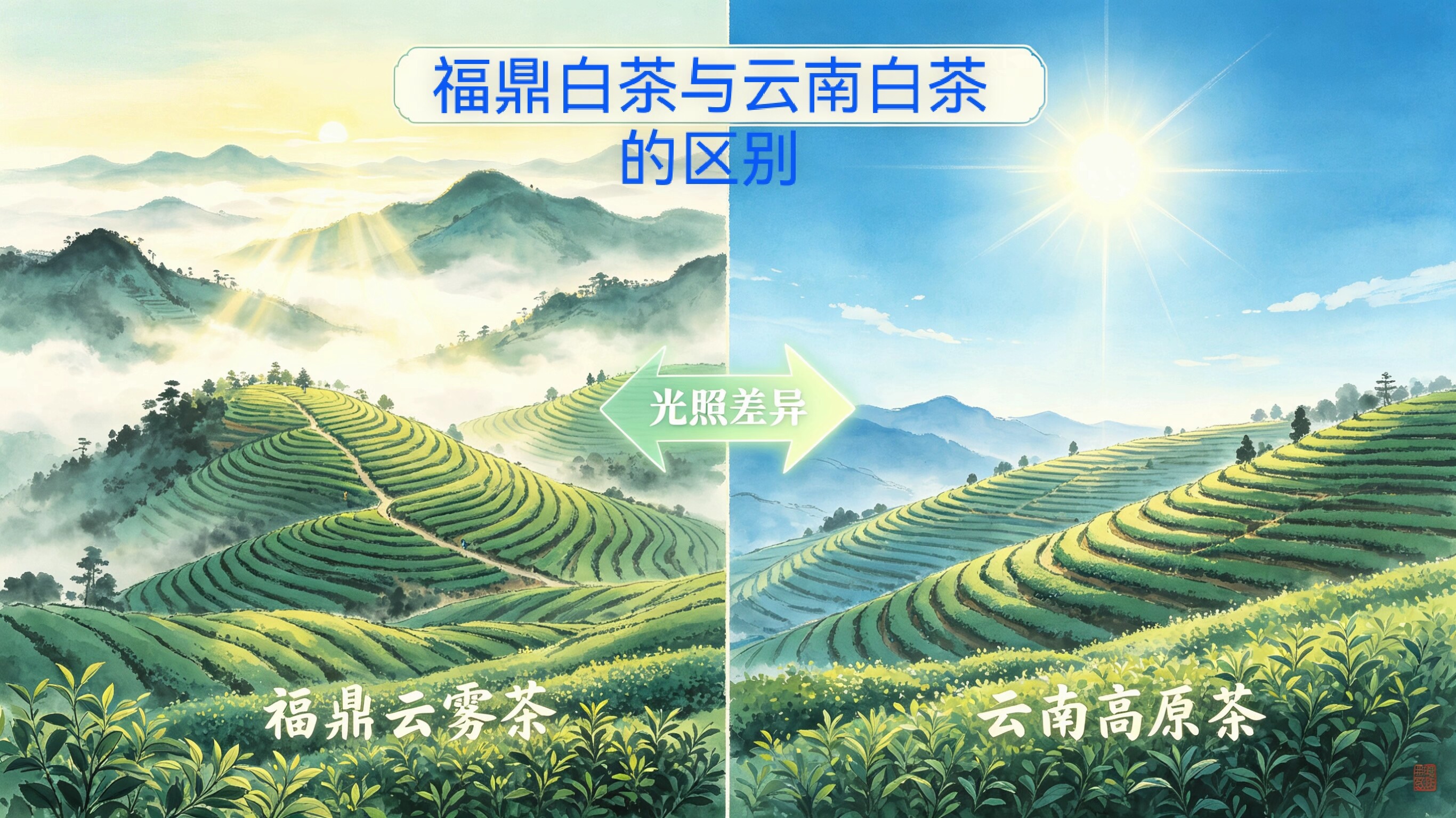
Core Logic:Differences in light conditions between regions alter the phenol-to-amine ratio in tea leaves, directly shaping taste, aroma, and brewing characteristics. While variety provides the foundation, light is a critical environmental driver—neither should be favored over the other.
Using the same "no stir, no knead" white tea processing method, Fuding and Yunnan white teas taste completely different. Many tea enthusiasts focus only on the difference in tea plant varieties but overlook the crucial environmental factor behind it: sunlight exposure.
Light intensity and light quality ratios regulate nitrogen and carbon metabolism in tea plants, directly altering the polyphenol-to-amino acid ratio. Amino acids contribute freshness and sweetness, while polyphenols provide the tea's structure and astringency. Different ratios create two distinct white tea flavor profiles.
1. Light Conditions: Diffused Cloudy Light vs. Intense Direct High-Altitude Sunlight
Fuding: Coastal mist and clouds, dominated by diffuse light.
Fuding is backed by Mount Taomu and faces the East China Sea. Tea gardens are mostly located on hills at elevations of 200–800 meters. Oceanic monsoons bring abundant sea fog, which often shrouds the tea mountains. Direct sunlight is largely blocked by clouds, making diffuse scattered light dominant while UV radiation remains relatively mild.
Under soft diffuse light, nitrogen metabolism in tea plants is dominant, promoting the abundant synthesis of free amino acids such as theanine. Synthesis of polyphenols and catechins is moderately suppressed, resulting in a low phenol-to-amino acid ratio.
The tea buds and young leaves maintain tenderness well, are relatively thin and soft, and accumulate compounds that favor a fresh, crisp, and sweet flavor.
Yunnan: Plateau and mountainous terrain with intense direct sunlight and high UV levels
The core production areas of Yunnan White Tea are typically located at altitudes between 1200 and 2000 meters, where the air is thin, cloud cover is sparse, sunlight exposure is prolonged, and intense direct radiation with strong UV rays creates significant day-night temperature fluctuations.
To defend against damage from intense UV light, tea plants activate stress-responsive secondary metabolism. This leads to robust carbon metabolism and the massive synthesis of polyphenols, catechins, and polysaccharides. In contrast, amino acid accumulation remains limited, resulting in a high phenol-to-amino acid ratio.
Thick, dense leaves with high total extractables, delivering a robust tea soup structure and ample reserves of bitter and astringent compounds.
Simple understanding:
Fuding: Soft, misty light; rich in amino acids with a low phenol-to-amino acid ratio, delivering a fresh and smooth taste.
Yunnan: High-altitude intense sunlight cultivates high levels of polyphenols and polysaccharides with a superior phenol-to-amino acid ratio, delivering a rich, bold, and robust flavor.
⚠️ Reminder: The tea cultivar is fundamental; sunlight amplifies differences in chemical composition. Fujian Fuding large, medium, and small leaf varieties, along with Yunnan large-leaf varieties, inherently possess different base compounds. Sunlight exposure further widens the flavor gap.
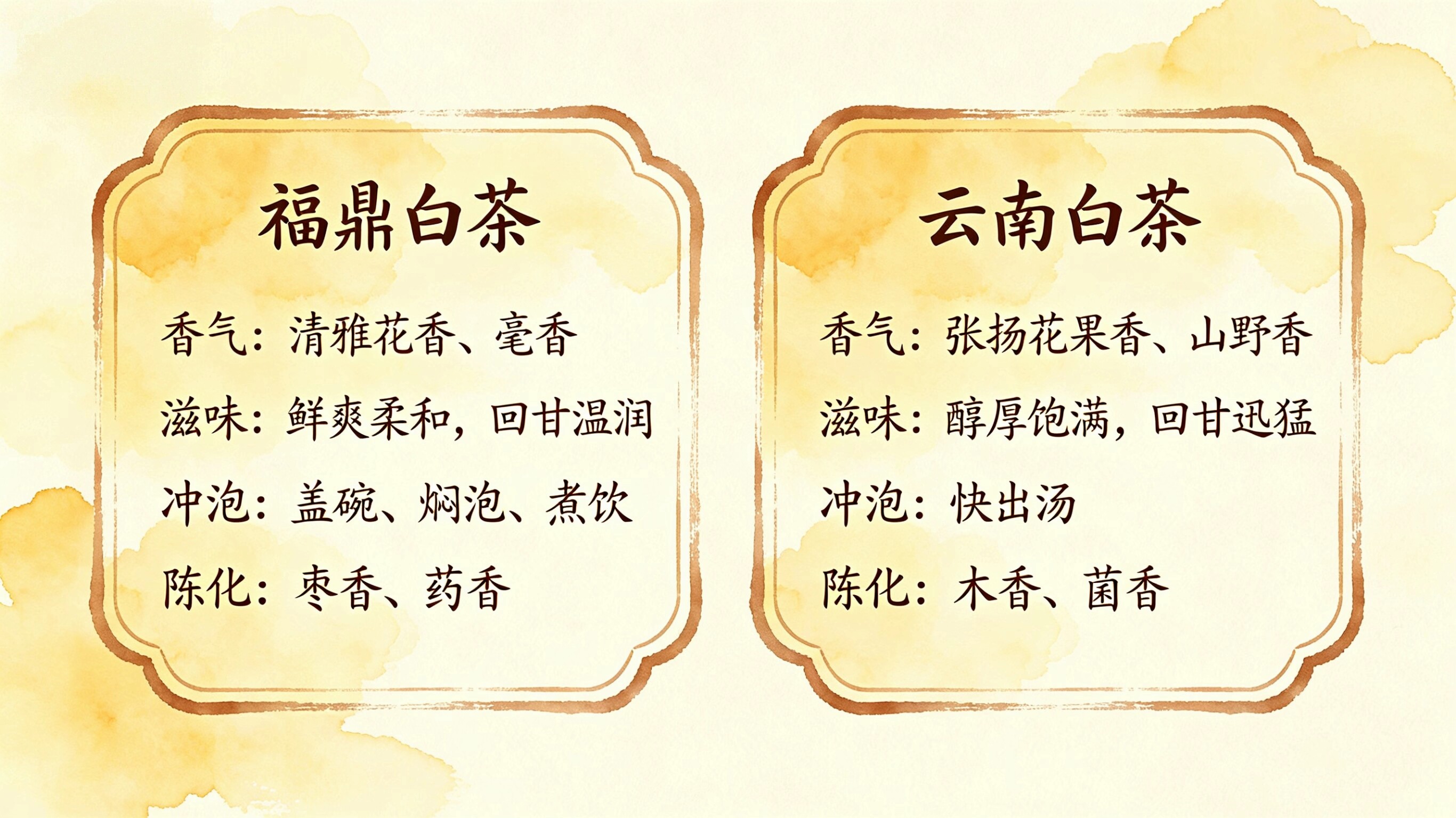
2. Differences in phenol-ammonia ratios create distinct taste profiles.
Fuding White Tea | Low Polyphenol-to-Amino Acid Ratio: Fresh, smooth, and resistant to bitterness when steeped.
Aroma: Prominent pine needle fragrance, delicate floral notes, and honeyed sweetness. The aroma is subtle and understated, with a soft, lingering cold-cup finish.
Taste: Delicate and smooth on the palate, with a fresh, sweet clarity. Bitterness is minimal, followed by a gentle, long-lasting sweet aftertaste. Due to its high amino acid content, even when steeped covered or boiled, it resists developing strong astringency. Ideal for gaiwan brewing, cold steeping, or simmering.
Color: Fresh tea is light apricot and honey-apricot, clear and bright; aged tea turns to light amber.
Aging Trajectory: Slow transformation in dry storage gradually develops jujube, glutinous rice, and medicinal aromas, resulting in a smooth, mellow, and gentle profile.
Yunnan White Tea | High Polyphenol-to-Amino Acid Ratio: Rich and full-bodied, sweet when brewed quickly, prone to astringency if steeped too long.
Aroma: Intense floral and fruity notes with a powerful burst of wild honey fragrance. The aroma is bold and expressive, highlighting distinct mountain characteristics. The first infusion delivers a striking aromatic impact.
Taste: The soup is thick, smooth, and full-bodied with a strong tea energy. Sweetness follows quickly. Best brewed with a fast pour; prolonged steeping extracts excessive polyphenols from the leaves, leading to astringency.
Color: Deep golden, rich and glossy.
Aging trajectory: Faster conversion rate, with prominent woody, fungal, and wild notes. The mountainous character persists long-term, resulting in a bolder style.
3. How processes compensate for inherent material differences caused by lighting
Fuding White Tea: Traditional sun-dried, two-stage withering. Gentle sunlight enhances the fresh, bright character imparted by misty conditions, perfectly aligning craftsmanship with terroir.
Yunnan White Tea: To mitigate the high polyphenol content caused by intense high-altitude sunlight, many regions use indoor air-drying (Moonlight White processing) to avoid direct exposure, reducing bitterness and enhancing natural sweetness. However, while this technique can optimize the tea's profile, it cannot fundamentally alter the inherent chemical composition shaped by the high-altitude environment.
This also explains why, even among white teas, some remain smooth regardless of steeping time while others turn astringent quickly—the root cause lies in inherent differences in the polyphenol-to-amine ratio.
IV. No Superiority or Inferiority: Two Aesthetic Expressions of Terroir
Fuding white tea is a delicate freshness gifted by mist-filtered light; Yunnan white tea is a rich intensity nurtured by the plateau's intense sunlight.
For those who prefer gentle, refreshing teas for daily brewing or simmering, and enjoy the warmth of aged tea, choose Fuding White Tea.
For a full-bodied, rich profile with floral and mountain notes, fast brewing, and bold tea character, choose Yunnan White Tea.
Many compare the two, seeking to declare a winner. But terroir has no single standard answer. Sunlight shapes the phenol-to-alkaloid ratio, grape varieties lay the foundation, and winemaking techniques make fine adjustments—together creating a diverse world of Bai Cha.
For the tea industry, this offers a key insight: one cannot simply apply a single process across all production regions. The sunlight withering techniques from Fuding do not directly translate to high-altitude Yunnan; likewise, Yunnan's shade-drying methods are not fully suited to Fuding's coastal, high-humidity environment. Respecting each region's unique light and climate conditions and adapting tea-making practices accordingly is the sustainable path forward for white tea.
Conclusion
The difference between Fuding White Tea and Yunnan White Tea lies not only in the tea cultivar but also in the interplay of sunlight and terroir.
Mist-diffused light in Fuding creates a low phenol-to-amino acid ratio, delivering fresh and mellow white tea. Intense high-altitude sunlight in Yunnan yields a high phenol-to-amino acid ratio, building a full-bodied and robust structure for its white tea.
Grasping the light logic behind the phenol-ammonia ratio unlocks the fundamental code for flavor differences between the two white tea varieties.