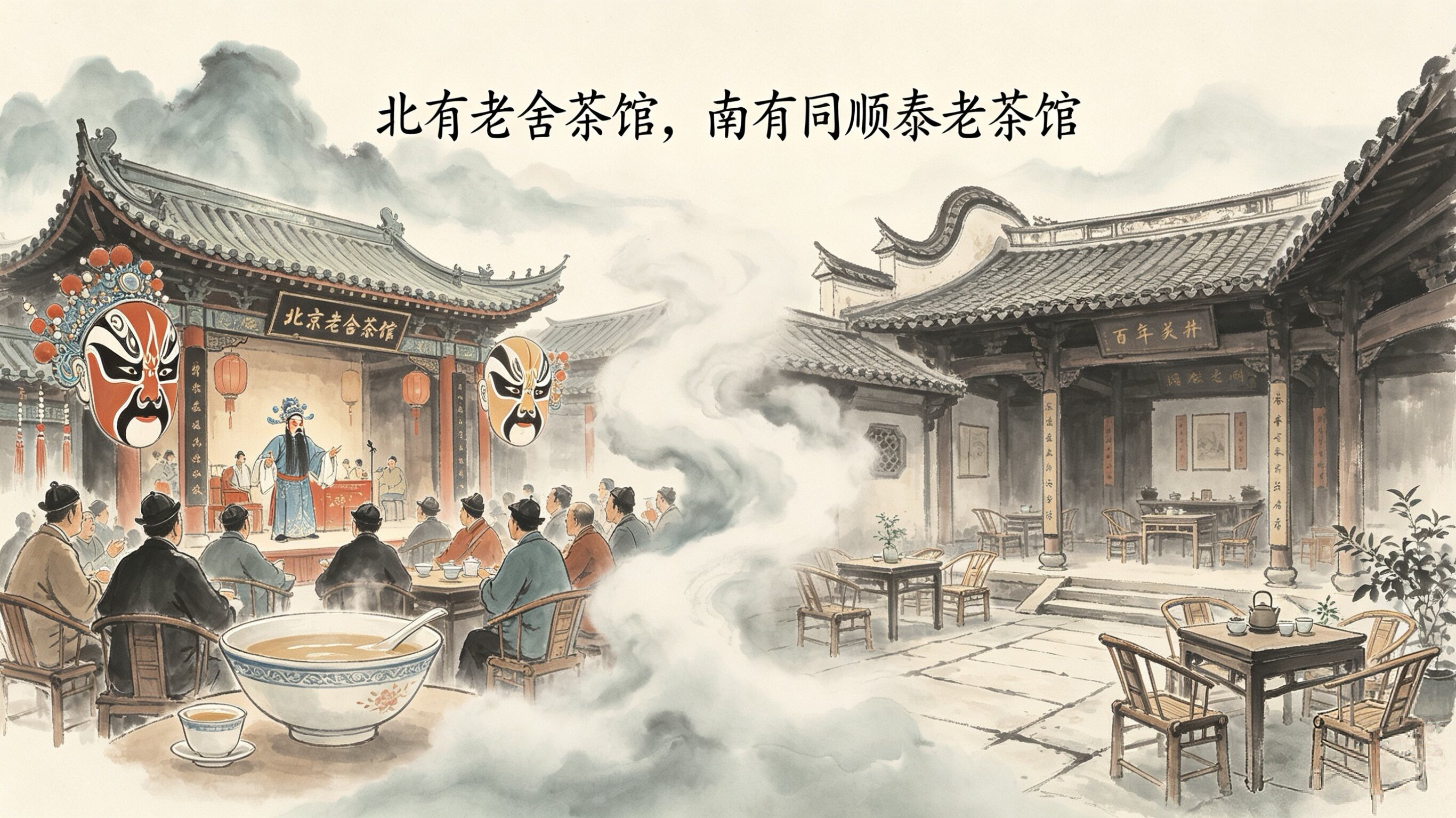
Old She's Teahouse in the North, Tongshuntai Old Teahouse in the South: Two historic teahouses that tell China's story through time and tea aroma.
When people think of traditional teahouses in China, Beijing's Lao She Teahouse often comes to mind first. Over a thousand miles away, on the historic Bailing Street in Fuding, Fujian Province, stands Tongshuntai, a century-old tea house founded in 1885 (1885). This has given rise to the saying: "In the north is Lao She Teahouse; in the south is Tongshuntai."
Editor's Note: This is a cultural tourism slogan, not an ancient proverb. From north to south, it represents two distinct Chinese tea house models: one embodies Beijing's vibrant folk culture, the other chronicles the legendary maritime silk road tea trade of southeastern China.
When people think of traditional teahouses in China, Beijing's Lao She Teahouse often comes to mind first. Over a thousand miles away, on the historic Bailing Street in Fuding, Fujian Province, stands Tongshuntai, a century-old tea house founded in 1885 (1885). This has given rise to the saying: "In the north is Lao She Teahouse; in the south is Tongshuntai."
One in the north, Beijing's vibrant cityscape; one in the south, where mountains meet the sea and tea traditions flow. Two teahouses, separated by thousands of miles with distinct cultural roots, yet both united in their mission to carry forward China's tea heritage.
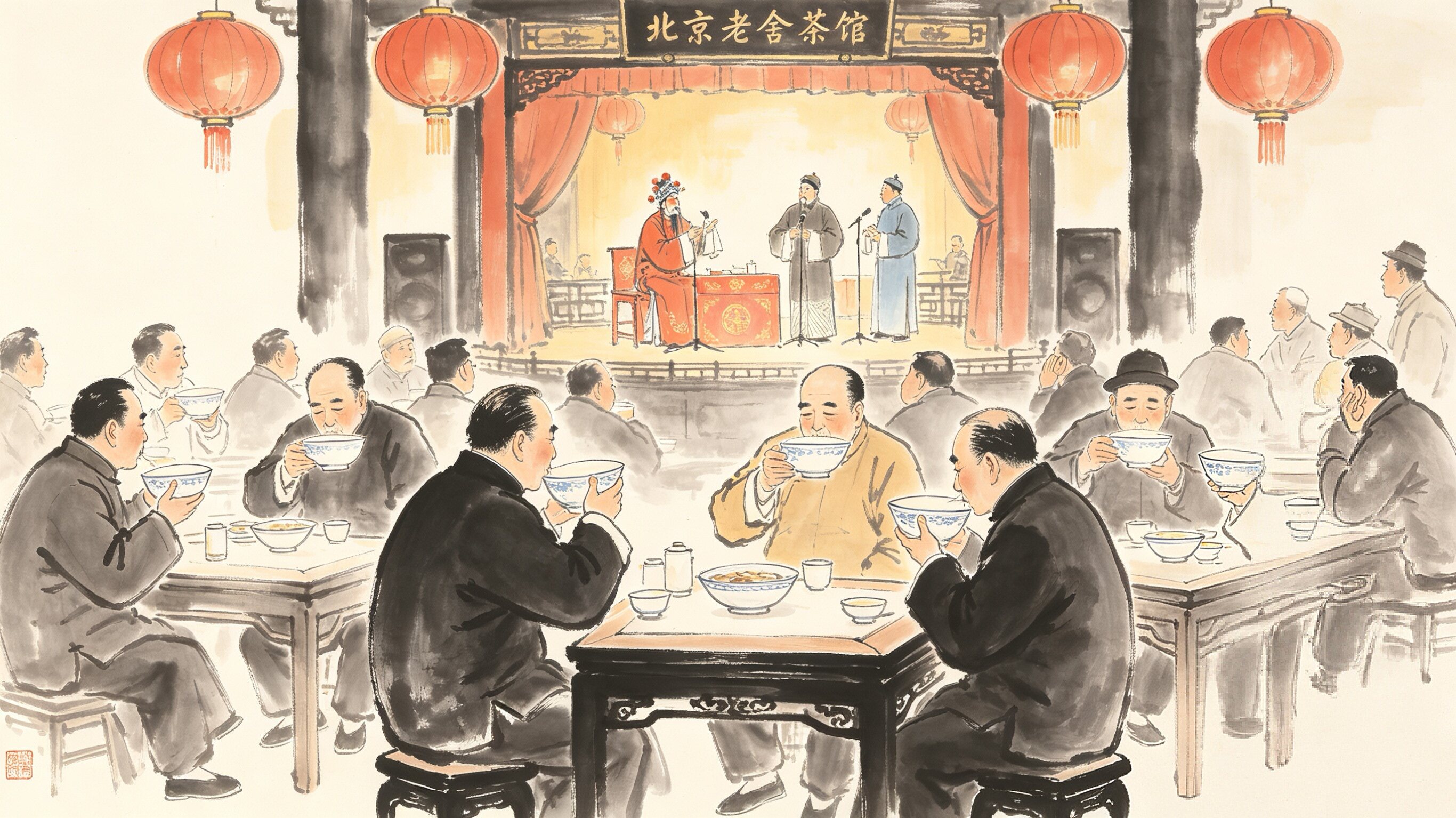
The Lao She Teahouse in northern Beijing, rooted in the bustling Qianmen district, stands as the benchmark for authentic Beijing-style folk teahouses. Starting as a humble "Lao Er Fen" large-bowl tea stall, it officially opened its doors in 1988, seamlessly blending traditional performing arts—including Peking Opera and variety acts—with tea culture. Here, tea serves as the medium, while watching performances and listening to music take center stage. Enjoy a cup of jasmine tea alongside captivating Beijing-accented shows that capture the vibrant essence of daily life. The teahouse revives the lively atmosphere of old Beijing's storytelling venues, packaging local customs and intangible cultural heritage into an iconic city image. It has welcomed countless domestic and international visitors, becoming a window through which northern Chinese tea culture is showcased to the world. Stepping into the Lao She Teahouse immerses you in the energetic, authentic street life beneath the shadow of the imperial capital.
Head south to Fuding in eastern Fujian, arriving at the ancient Bailing Tea Street. Tongshuntai Old Teahouse stands as a living relic of the Maritime White Tea Route.
Over a century ago, in the late Qing Dynasty, Bailin was a bustling hub for merchants, with thirty-six tea houses gathering along the old street. Tongshuntai was one of the most prominent among them. During the Qing era, the Bailin Baihao tea produced here was the representative white tea of its time and the precursor to modern Silver Needle white tea. Alongside Bailin Gongfu black tea, it sailed from the port to Southeast Asian countries, marking a glorious chapter in the export history of Chinese white tea.
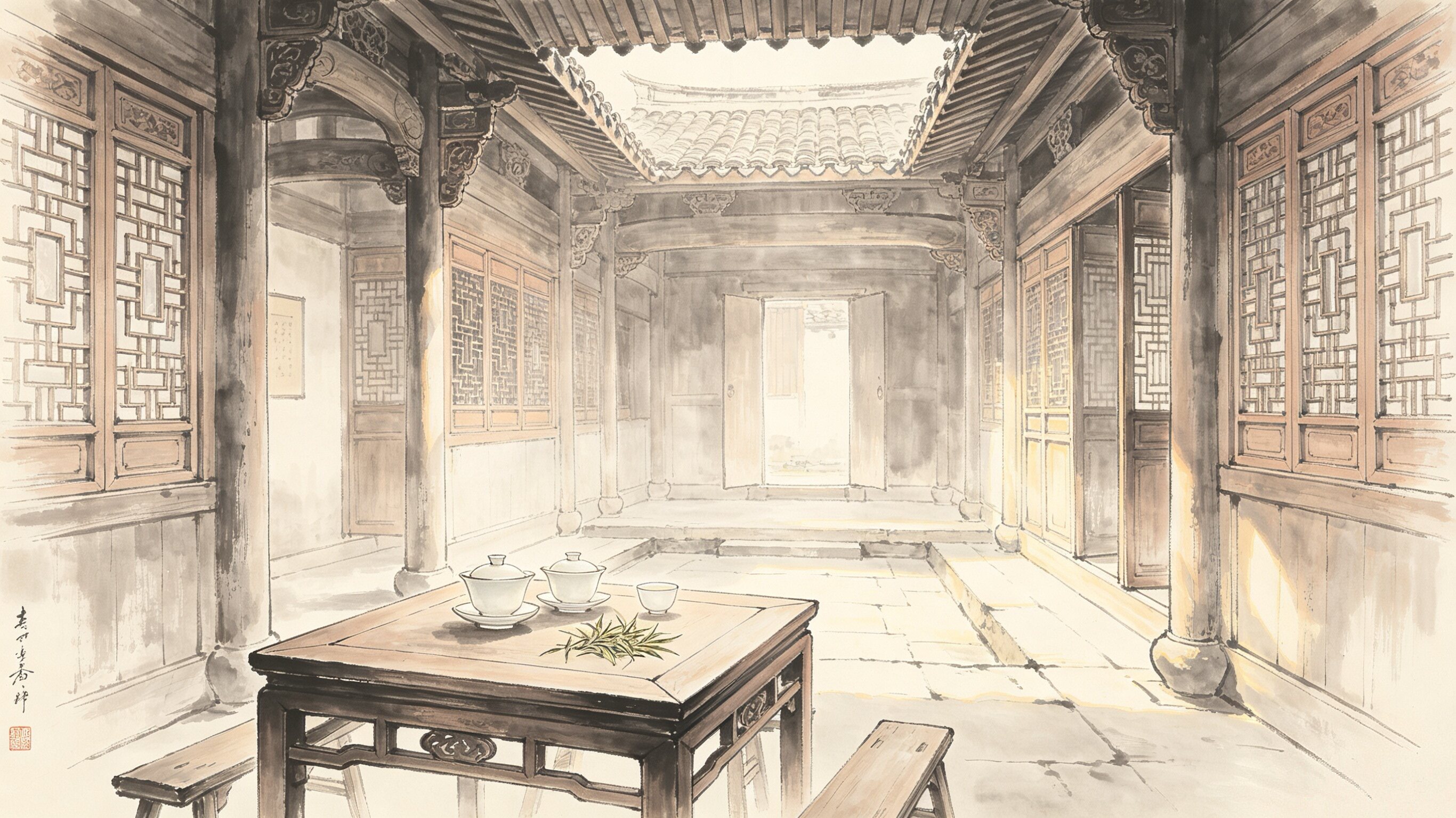
Amidst the passage of time, many historic storefronts along Bailin Ancient Tea Street remain as architectural ruins. Tongshuntai, a century-old tea house, has preserved its original site with an authentic restoration approach and continues to operate as one of the few year-round open businesses on the street.
Push open the old wooden door of the ancestral home. The carved wooden beams and lattice windows remain unchanged from their appearance in the late Qing Dynasty and early Republic era. Inside, old account books, vintage tea certificates, and antique tea utensils are displayed. Each aged artifact tells the story of the rise and fall of cross-sea tea trade in days gone by. There is no boisterous opera performance here, but instead a deep sense of heritage rooted in the mountains and seas, shaped by centuries of white tea tradition.
It's more than an old house for tea; it's pioneering a new model for the tea industry: from selling tea, to selling space, to selling time.
Enjoy Baicha Silver Needle and aged Fuding white tea to honor tradition, while innovating with white tea ice cream, white tea café blends, and cold-brew teas to attract young visitors. Open the courtyard seating in historic homes, inviting guests to sit, slow down, and savor a leisurely tea culture experience. These heritage homes no longer just display history—they transform it into something tangible and immersive.
Lao She Teahouse: tea served with opera, showcasing northern folk culture; Tong Shun Tai Old Teahouse: history steeped in tea, preserving the maritime silk road heritage of Southeast China.
A bustling hub witnessing life in all its forms; a quiet sanctuary for savoring a century of tea trade.
In the north, tea and tunes; in the south, courtyards and history. Though their business models differ, they share a common spirit. Old teahouses are never just places to drink tea—they are containers of urban memory and spaces where traditional culture comes alive.
Amidst the tide of change, the traditional tea industry is undergoing transformation. Many restored historic buildings have become mere decorative displays bearing names. How can heritage brands truly come alive and turn historical assets into industrial value? Lao She Tea House and Tong Shun Tai Old Tea House each offer their own answer.
In the north, there's Lao She Tea House; in the south, Tongshuntai Old Tea House. Separated by mountains and seas, they stand as distant yet connected landmarks. One cup of bold northern jasmine tea, another of aged southern white tea—together, they paint a rich and diverse picture of Chinese tea culture.